



SAFEST: A Probabilistic

Risk Assessment Toolchain

A fully automatic, scalable, and state-of-the-art tool that can faithfully assess the risk of fail-operational/fault-tolerant dynamic systems with decision-making capabilities. Unlike others, it computes exact results, based on formal methods techniques such as probabilistic model-checking, with 100% mathematical guarantees. It is equally competitive with existing commercial tools, but offers more flexible modeling and analyses, going beyond the capabilities of other tools.

Laptop with website preview
FREE
for
Academia
Try 30 Days For Free

During the free trial period, do you have any questions? We'll Help You!

Whether you have a question or want help building a solution, we'll give you the information you need to make the best decisions for your business. Start with your 30 day free trial and learn what SAFEST can do for you.

Step 1 Icon Get Started Now

Start your 30-day free trial period, and explore the SAFEST.

Step 2 Icon Schedule a Demo

Our experts will contact you to learn about your difficulties and answer any questions you may have regarding the SAFEST.

Step 3 Icon Integrate with your workflows

Our professionals will even develop a free prototype solution to your problems, outlining the advantages of the SAFEST over competing PRA technologies.

Step 4 Icon Need Consultancy

We continue to provide excellent help. We provide a wealth of technical resources and consulting services to help you successfully transition to SAFEST and handle any upcoming needs.

SAFEST Features Overview

Faithful modeling and analysis of complex systems

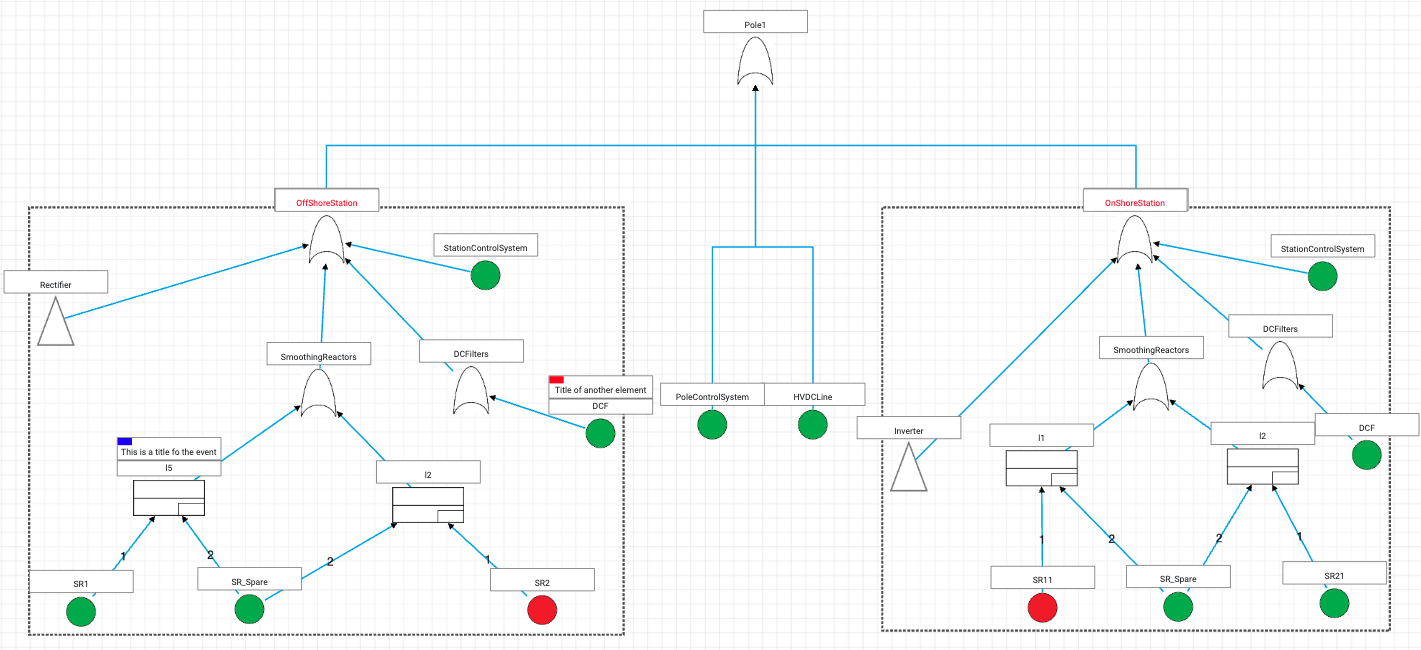
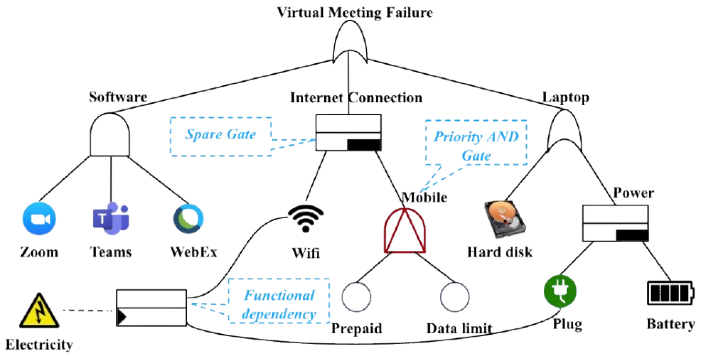
In order to accurately model large systems with redundancies, (probabilistic) functional dependencies, and temporal ordering among malfunctioning components—such as power plants, railroads, drones, medical equipment, satellites, and self-driving cars—static fault trees are too simplistic a formalism.

Similarly, event trees are unable to quantify losses such as the number of injuries, monetary loss, etc., or represent, for example, operators’ judgments following an accident, which may be necessary to lessen the impact of severe repercussions.

Markov chains, dynamic fault trees, event trees and reliability block diagrams overcome the above-mentioned shortcomings and, thus, enable the modeling and analysis of fail-operational/fault-tolerant dynamic systems.

Structure knowledge example

A tool for compliance with safety standards of high-tech industries

SAFEST is a unique tool that allows probabilistic risk assessments of complex dynamic systems, which is required by high-tech agencies like NASA, ESA, the Federal Aviation Authority (FAA), and the Nuclear Regulatory Commission (NRC). Additionally, it aids in fulfilling the requirements of global standards like ISO 26262, which demands rigorous risk assessment in the automotive industry:

ISO 26262 Logo
  • Metrics are verifiable and precise enough to differentiate between different system architectures.
  • [For systems where the] concept is based on redundant safety mechanisms, multiple-point failures of a higher order than two are considered in the analysis.

Specification (CSL logic) & quantification of advanced reliability metrics

In addition to traditional reliability metrics, SAFEST enables computing of advanced dependability metrics expressable in continuous stochastic logic (CSL).

Graphical Interface for first-time users and experienced users

The tool provides a drag-&-drop interface to model systems graphically, specify and verify measures of interest, plot results, and do step-by-step simulation of models. Advanced users can use features like specifying custom properties, characterizing complex system behaviours (states using Boolean equations) and quantifying their probabilities.

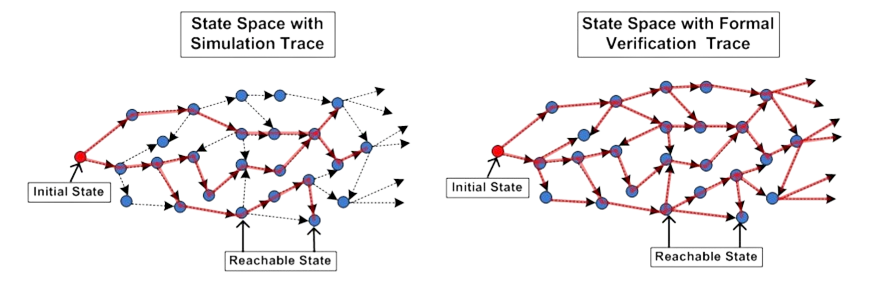
Exact analysis using formal methods (probabilistic model-checking)

Complex systems usually have dynamic behaviour because of e.g. spare components, failure sequence among components, functional dependencies, etc. The analysis of such systems is usually quite complex which is usually based on simulation or generalization techniques. Unlike others we implement formal verification techniques e.g. probabilistic model-checking, and thus provide exact results on measures of interest. For systems having large state space, we provide an iterative analysis approach providing upper and lower bounds on the exact values of measures as discussed below.

Structure knowledge example

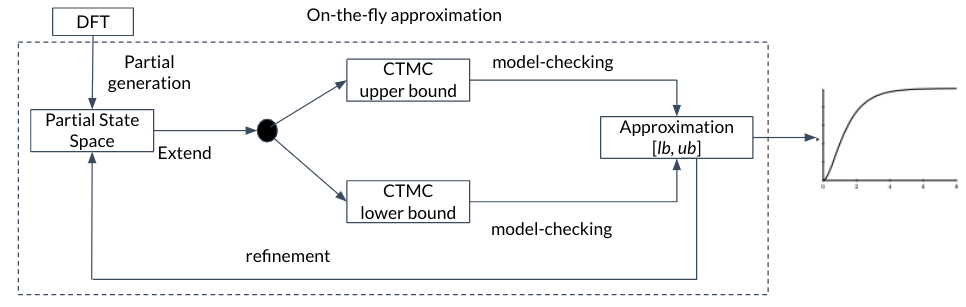
Sound analysis of very large systems

In order to compute exact results for measures, first the full state space is constructed, and then analyzed. However, many states in the state space only marginally contribute to the result. If one is interested in an approximation of the MTTF (or the reliability), these states are of minor interest. SAFEST provides an approach that generates the state-space on-the-fly, and then compute an upper and a lower bound to the exact results on a partially unfolded system, which might be much smaller as compared to the fully unfolded system. The approximation is sound ensuring the exact result lies between these two bounds.

Structure knowledge example

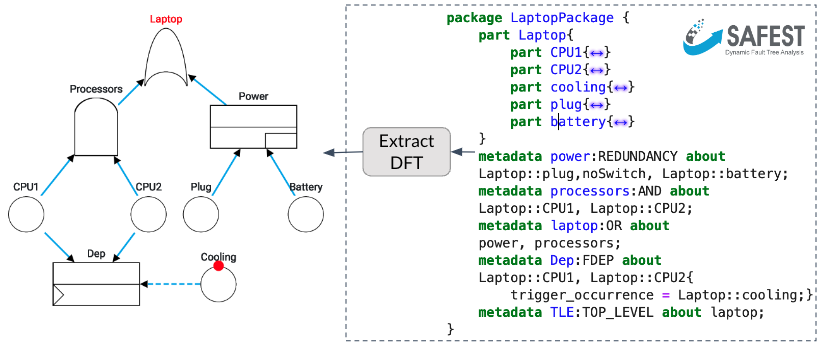
Model-based safety assessment (DFTs extraction from SysML v2 models)

SAFEST automates model-based risk assessment (MBRA) in parallel with model-based systems engineering (MBSE). By annotating safety aspects (e.g. redundancy, functional dependencies, failure ordering, etc.) in SysML 2.0 models, aur algorithm automatically extract relevant DFTs out of them. This reduces a lot of effort required in building DFTS manually from SysML 2.0 models.

Structure knowledge example

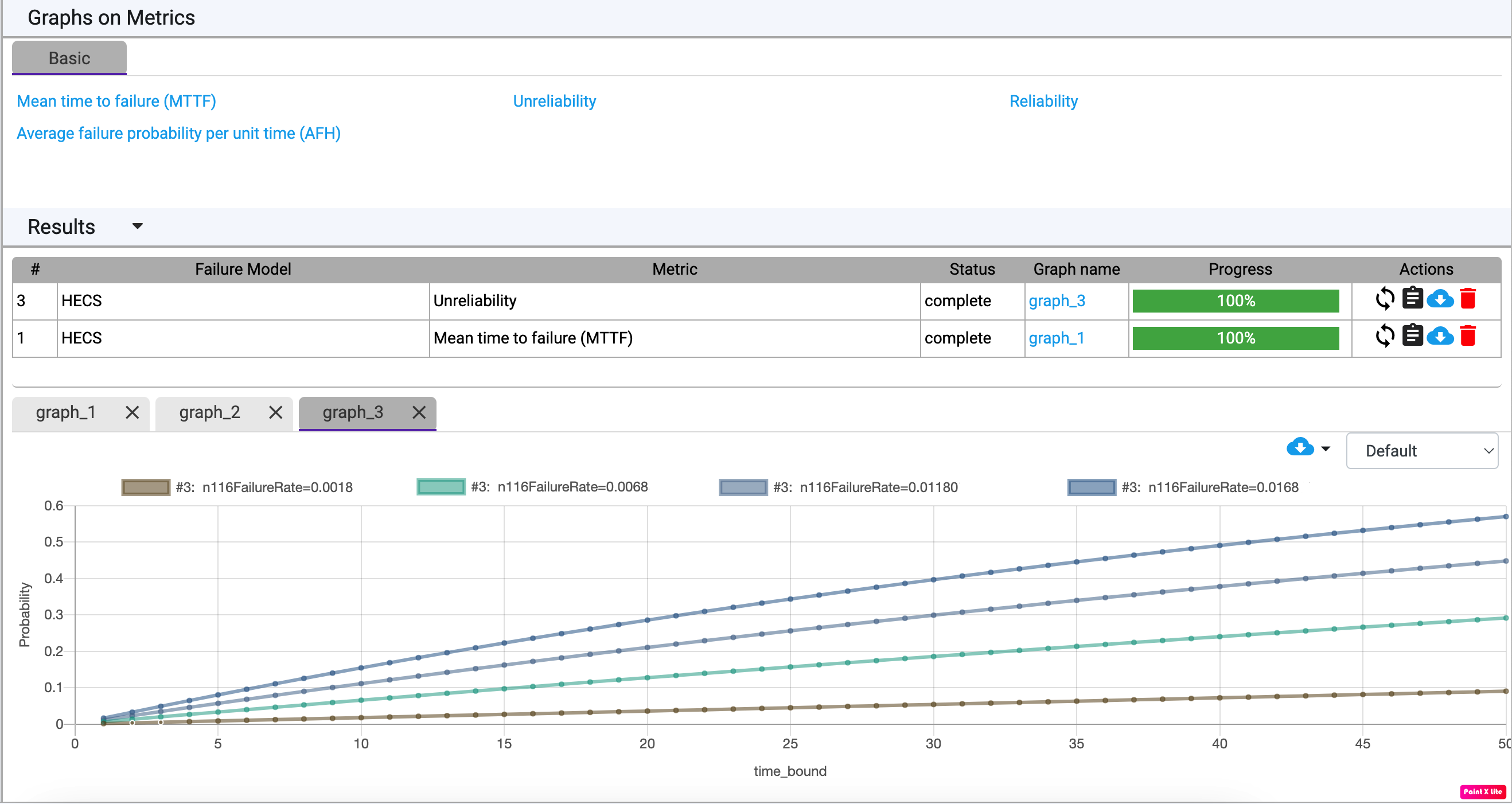
Graphs on (advanced) measures

SAFEST provides a graphical interface to plot and compare measures of interest e.g. reliability of different sub-systems, which is helpful in deciding maintenance schedules.

Structure knowledge example

Understanding models through graphical simulation

The idea is to interactively visualize the impact of a sequence of events in a model. For example, in DFTs the user selects one of the basic events (BE) that should fail first. Based on this, the status of other DFT elements is redetermined and then visualized (failed, operational, fail-safe, claiming in SPAREs, etc.). Afterwards, another BE is selected to fail and so forth. The main benefit of this feature is the understandaing of the behaviour of dynamic gates of DFTs, thus helping in building realistic models of systems.

Structure knowledge example

Parametric fault trees and event trees & (empirical) failure distributions

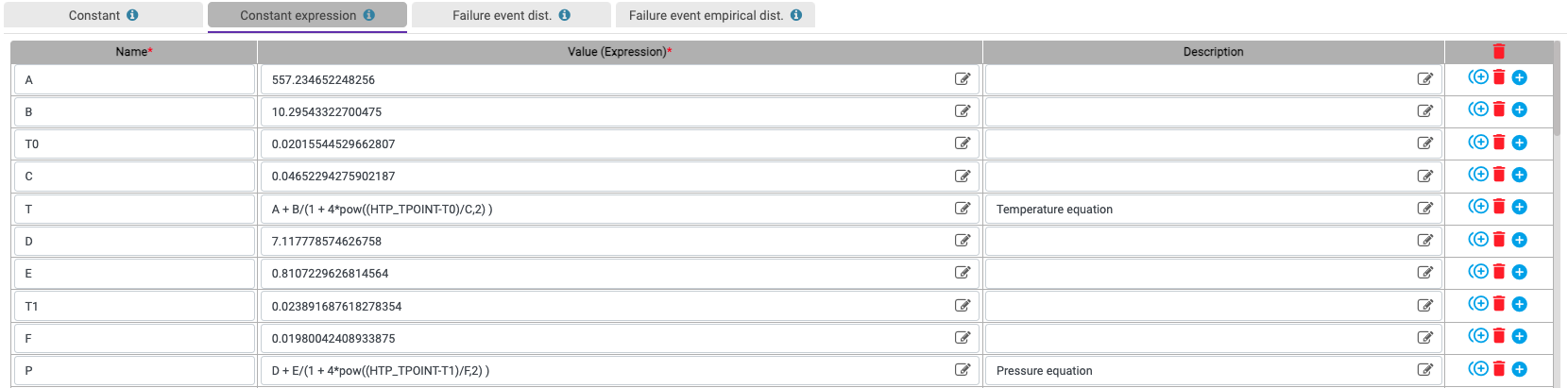
Model parameters can be provided in the form of constants, real expressions, and failure distributions. Failure distributions can be specified manually or evaluated from data sets that are generated during system operations. Furthermore, weighted failure distributions are also supported, allowing combining two or more failure distributions into one failure distribution. For example, combining failure distributions from international reliability standards with empirical distributions (calculated from field data) allows for having more meaningful distributions for system analysis in production.

Powered by Storm model-checker as the backend computational engine

The Backend Computational Engine SAFEST is powered by [Storm] -- a state-of-the-art probabilistic model checker. Storm is a tool for the analysis of systems involving random or probabilistic phenomena. Given an input model and a quantitative specification, it can determine whether the input model conforms to the specification. It has been designed with performance and modularity in mind. SAFEST interacts with the DFT module of Storm -- storm-dft -- using a Python binding [stormpy] and utilizes the rich features of [diftlib] library.

Structure knowledge example
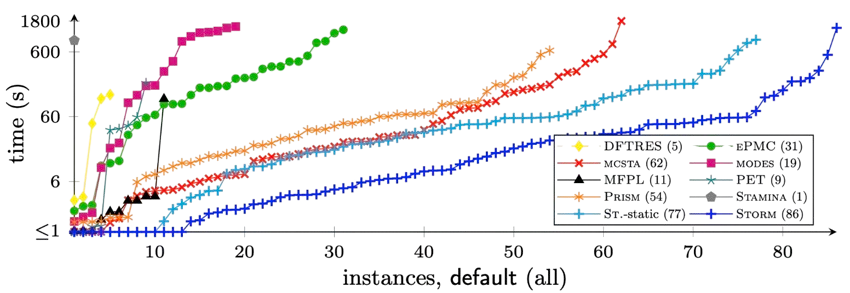
Comparison of Tools for the Analysis of Quantitative Formal Models (QComp 2020)

SAFEST is validated against a DFT benchmark

The SAFEST tool has been validated against multiple models given on the Quantitative Verification Benchmark Set as well as on FFORT fault tree forest websites. The Quantitative Verification Benchmark Set is a collection of probabilistic models to serve as a benchmark set for the benefit of algorithm and tool developers. Whereas, FFORT is a collection of fault trees gathered from scientific literature and open industrial reports by University of Twente, the Netherlands.

Application Domains

Image 1
Automotive
Image 2
Aviation
Image 3
Robotics
Image 4
Intelligent Systems
Image 5
Medical
Image 6
Defense
Image 7
Nuclear
Image 8
Renewable Energy
Image 9
Oil & Gas
Image 10
Railway

Industrial Partners

research-student

Academic Partners

Users appreciate SAFEST

Dr. Massod Akmali

Assystems

I believe SAFEST is an exceptional PRA toolchain, especially for nuclear R&D. SAFEST enables me to confirm the dependability of nuclear safety systems during a time period that is divided into phases, such as pre-LOCA and post-LOCA, because of its complex reliability measures. In all my professional experience, I have never encountered a tool like this. Bravo, the SAFEST team!

Fahad Izhar

Tasnee

SAFEST is revolutionary for dynamic analysis! The handling of all DFT gates allows for the modeling of systems with exceptional accuracy. It's much more robust, scalable, and numerically accurate (up to 16 decimal places) than other tools I've used.

Luigui Salazar

Assystems

It is an excellent tool for modeling how systems behave dynamically. If an event occurs during operations, I can quickly add new failure modes for system components. For example, I can add more failure modes for elements that are exposed to adverse weather during operations. Working with such a tool is simply great!

Dr. Emir Roumili (PhD)

CFIT

I found it very useful to model redundancy in dynamic systems. The sole tool that can faithfully model “failure-on-demand” for components in cold, warm, or hot redundancy conditions. Amazing R&D by Prof. Joost-Pieter Katoen , Prof. Marielle Stoelinga , Prof. Matthias Volk, Dr. Falak Sher, and others. Congratulations team!


25+

Partners

20+

Projects

8+

Happy Clients

200+

Meetings

Lets start the journey

SAFEST Modules

Modules are integrated with each other.
  • FMEA
  • Fault tree analysis
  • Event tree analysis
  • Master logic diagram analysis
  • Markov analysis
  • Bowtie analysis
  • Weibull analysis
  • Reliability block diagram analysis
  • Attack-Fault tree analysis
  • Analysis reports

Enterprise Features

  • Provides users & workspaces management
  • Enables R&D collaboration among academic & industrial researchers
  • Enables simultaneous editing of projects by users working in teams
  • Enables resusability of previous results
  • Supports docker-based deployment on MacOS, Linux, Windows, etc.
  • Supports deploymnet on desktops, laptops, servers, and clouds